Why your Tokyo hotel stay depends on smart Tokyo Japan SIM card options
Before you choose a hotel in Tokyo, think carefully about Tokyo Japan SIM card options and other ways to stay online. Reliable mobile data will shape how easily you find your lobby, message the front desk, and adjust plans when a room is not ready, so connectivity is as fundamental as location or breakfast. When you compare properties across Japan, ask how your SIM, your phone, and your data plans will support the way you actually travel.
Most visitors now arrive with a shortlist of hotels and a long list of questions about SIM cards, eSIM choices, and pocket Wi‑Fi rentals. The right travel SIM or eSIM will let you check in online, translate Japanese signs around the airport terminal, and navigate from Narita or Haneda to your chosen neighbourhood in minutes. If you ignore these Japan SIM decisions until the day you land, you may waste precious data days in queues at the airport instead of relaxing in your room.
Think of connectivity as part of your overall Japan travel budget, not an afterthought. A well chosen prepaid SIM or eSIM with enough data for several days will often cost less than a single hotel breakfast, yet it protects every other reservation you make. When you weigh Tokyo Japan SIM card options, consider how many days you will stay, how many countries you will visit on the same trip, and whether you prefer physical SIM cards, a Japan eSIM, or a pocket Wi‑Fi device.
Comparing physical SIM, eSIM, and pocket WiFi for hotel guests
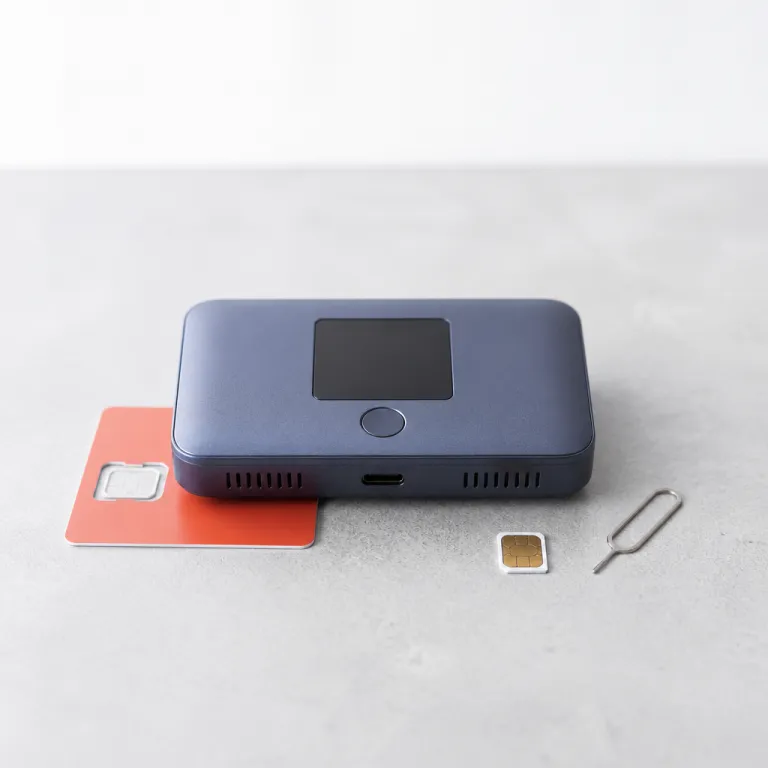
For most hotel guests, the first decision is between a physical SIM, an eSIM, or a pocket Wi‑Fi router. A physical SIM card for Japan replaces your home card, gives you local data, and sometimes offers voice service with a Japanese phone number, while an eSIM downloads directly to compatible phones without opening the SIM tray. Pocket Wi‑Fi devices create a small portable hotspot that several phones can share, which can be ideal for families booking multiple rooms in the same hotel.
Physical SIM cards remain popular because they work with almost any unlocked phone and are easy to buy at airport kiosks, electronics stores, or convenience stores near major stations. These Japan SIM cards usually come as prepaid products with fixed validity, such as 7, 15, or 30 days of high‑speed data, which suits typical Japan travel itineraries that combine Tokyo with other cities. If you choose this route, remember that your home card will be removed, so you may lose access to your usual phone number for calls and texts during your stay.
By contrast, an eSIM is entirely digital and is activated by scanning a QR code before or after you arrive in Japan. A Japan eSIM or broader Asia eSIM plan can be ideal if you are visiting several countries, because you can switch plans in settings without handling any cards. Pocket Wi‑Fi rentals sit somewhere in between, offering unlimited data or generous data allowances for a set number of days, but they add one more device to charge in your hotel room every night.
Where to buy SIM cards in Tokyo and how this affects your hotel plans
Tokyo makes it surprisingly simple to secure a SIM card as soon as you land. At both Narita and Haneda, you will find dedicated counters in each airport terminal selling tourist SIM cards, Japan eSIM activation vouchers, and pocket Wi‑Fi rentals, often open from early morning until late at night. Buying at the airport means your phone will be online before you even reach the taxi stand, which is invaluable if you need to message your hotel about an early check in or a delayed arrival.
Outside the airport, large electronics chains such as Bic Camera and Yodobashi Camera stock a wide range of SIM cards and data‑only products for visitors. Convenience stores like 7‑Eleven also sell some prepaid SIM packs, though the choice of data plans and multi‑day options is usually narrower than at specialist counters. According to recent guidance for visitors from the Japan National Tourism Organization, “Where can I buy a SIM card in Tokyo? At airports, electronics stores, and convenience stores.”
Many travellers now prefer to order SIM products online before departure, especially if they want a specific brand such as IIJmio, Mobal, or Sakura Mobile. When you order SIM cards in advance, you can have a physical SIM or an order voucher delivered to your home, or arrange collection at an airport terminal counter on your arrival day. This approach lets you compare Japan offers, unlimited‑data packages, and voice add‑ons calmly, instead of making rushed decisions after a long flight.
Key players and plan types for Tokyo Japan SIM card options
Several established providers now focus on Japan travel connectivity, and their offers differ in ways that matter for hotel guests. IIJmio, for example, is known for tourist SIM cards with flexible data plans that prioritise reliability on Japanese networks, which is essential if you rely on maps to reach smaller ryokan‑style properties. Brands such as Mobal and Sakura Mobile specialise in Japan SIM and Japan eSIM products for visitors, often bundling unlimited data or generous multi‑day allowances with clear English language support.
When you compare plans, look beyond the headline promise of unlimited data and examine the fair usage policy, speed caps, and the number of days included. Some prepaid SIM cards advertise “unlimited” usage but reduce speeds after a certain data threshold, which can affect video calls with your hotel concierge or streaming in your room. Others focus on balanced voice‑and‑data packages that include a Japanese phone number, which can be helpful if your accommodation prefers local calls for restaurant bookings or luggage delivery services.
For travellers who move between several countries in one trip, regional plans can be attractive. Certain eSIM plans cover multiple countries in Asia, allowing you to keep the same data profile as you move from Tokyo to Seoul or Singapore, though pure Japan eSIM products often provide better coverage and speed within Japan itself. Whatever you choose, confirm that your phone is unlocked, that it supports the necessary bands for Japanese phone networks as listed by your provider, and that the duration of the plan matches the number of nights you will spend in your Tokyo hotel.
Practical tips to match SIM choices with your hotel and itinerary
Choosing between different Tokyo Japan SIM card options becomes easier when you start from your itinerary. If you plan to stay mostly in one central hotel and rely on its free Wi‑Fi for heavy usage, a modest data SIM with a few gigabytes for maps and messaging over several days may be sufficient. Travellers who expect to roam across Tokyo, take day trips, and work remotely from cafés will usually benefit from prepaid SIM cards or eSIM plans with near‑unlimited data.
Business guests often need stable voice and data services to call Japanese partners, hotels, and restaurants. In that case, prioritise a Japan SIM or Japan eSIM that includes a Japanese phone number, or pair a data‑only plan with an internet calling app that works well over hotel Wi‑Fi and 4G or 5G networks. Families or groups booking several rooms may find that a pocket Wi‑Fi device with multi‑day unlimited usage is more economical, because multiple phones can share one connection while still using the hotel’s free Wi‑Fi in the evenings.
Whatever your profile, check a few technical points before you order SIM cards or activate an eSIM. Your phone must be unlocked and compatible with Japanese carrier bands, and you should estimate how many days of data you truly need based on your Japan travel schedule. It is wise to keep a small reserve of data for your final day, when you will rely on maps and messaging to reach the airport terminal and confirm flight details from your hotel lobby.
Cost, value, and how connectivity shapes your Tokyo hotel experience
From a budgeting perspective, connectivity in Tokyo is more affordable than many visitors expect. The average cost of a tourist SIM card with several gigabytes of data is around 4 000 JPY, based on typical offers listed by major tourist SIM providers and recent guidance from the Japan National Tourism Organization, which is often less than the price difference between two hotel categories in central districts. When you consider how that SIM, eSIM, or pocket Wi‑Fi underpins your ability to find your hotel, adjust bookings, and explore neighbourhoods, the value becomes clear.
Unlimited‑data packages can be tempting, but they are not always necessary for shorter stays. For a three or four day city break focused on one area, a smaller data SIM or prepaid card with clearly defined allowances may offer better value than more expensive “unlimited” plans, especially if your hotel’s free Wi‑Fi is strong. Longer Japan travel itineraries that combine Tokyo with Kyoto, Osaka, or rural regions often justify true unlimited data, because you will rely on navigation and translation tools far beyond the hotel lobby.
Remember that the cheapest Japan offer is not always the best choice. A reputable provider such as IIJmio, Mobal, or Sakura Mobile will usually offer more transparent plans, better English support, and clearer instructions for activation at the airport or in your hotel room. Before you order SIM products online, read the fine print about roaming in other countries, tethering rules for pocket Wi‑Fi, and any limits on voice service, so that your phone will perform exactly as you expect from check in to check out.
Key statistics for planning connectivity during a Tokyo hotel stay
- The average cost of a tourist SIM card with several gigabytes of data is about 4 000 JPY, which is a small fraction of a typical mid‑range hotel night in central Tokyo.
- Most airport kiosks and electronics stores in Tokyo can activate physical SIM cards or eSIM plans within a few minutes, so you can be online before reaching your hotel.
- Tourist‑focused providers in Japan now offer multiple durations, commonly 7, 15, or 30 days of data, which align well with standard Japan travel itineraries.
- Growing 5G coverage in major Tokyo districts means that many unlimited‑data and multi‑day plans now deliver higher speeds, improving video calls from hotel rooms.
FAQ about SIM cards and connectivity for Tokyo hotel guests
Do I need a residence card to buy a SIM in Tokyo ?
For short‑term visitors staying in hotels, a residence card is not required to buy tourist‑focused SIM cards. Long‑term mobile contracts aimed at residents do require a residence card, but prepaid SIM and Japan eSIM products for travellers can be purchased with a passport only. This makes it easy to secure data and voice services as soon as you arrive at the airport terminal.
Can I use my foreign phone with a Japan SIM or eSIM ?
You can use a foreign phone in Japan as long as it is unlocked and supports the necessary Japanese phone frequency bands published by your chosen provider. Most recent smartphones from major brands work well with both physical SIM cards and Japan eSIM plans sold by providers such as IIJmio, Mobal, and Sakura Mobile. Before you order SIM products, check compatibility on the provider’s website and confirm that your device allows eSIM activation if you prefer that option.
Where is the best place to buy a SIM card for a Tokyo hotel stay ?
The most convenient places are the mobile counters in each airport terminal at Narita and Haneda, where staff are used to helping visitors on tight schedules. Large electronics stores in central districts and some convenience stores also sell prepaid SIM cards, data‑only products, and pocket Wi‑Fi rentals. Travellers who want a specific brand or plan often choose to order SIM cards online in advance and collect them at the airport or have them delivered to their first hotel.
Is pocket WiFi better than a SIM card for families in one hotel ?
Pocket Wi‑Fi can be excellent value for families or groups sharing a room or suite, because several phones and tablets can connect to one device. A single unlimited‑data or multi‑day pocket Wi‑Fi plan may cost less than multiple individual SIM cards, especially for short stays. The trade‑off is that you must keep the router charged and carry it whenever you leave the hotel, whereas a Japan SIM or Japan eSIM lives inside each phone.
How should I estimate how much data I need for my stay ?
Start by counting how many days you will spend in Tokyo and how often you will rely on mobile data away from hotel Wi‑Fi. Light users who mainly check maps and messages may be comfortable with a few gigabytes over several days, while heavy users who stream video or work remotely should consider larger prepaid SIM or unlimited‑data plans. When in doubt, choose a slightly higher allowance, because topping up a tourist SIM card can be less convenient than selecting the right plan from the beginning.
References
- Tokyo Expat Network – overview of Japan SIM card costs and options for visitors, including typical tourist data packages and activation notes.
- IIJmio – official information on tourist SIM cards and data plans for Japan, with current pricing, supported bands, and step‑by‑step activation instructions.
- Japan National Tourism Organization – practical guidance on mobile connectivity for travellers, covering SIM cards, eSIM, and pocket Wi‑Fi, plus links to carrier coverage maps and 5G availability.
Comparison table: sample Japan SIM and pocket Wi‑Fi plans
| Provider (example) | Typical product | Approx. price (JPY) | Data & days | Tethering / fair‑use notes |
|---|---|---|---|---|
| IIJmio | Prepaid data SIM | 3 000–4 000 | ~5–10 GB, 14–30 days | Tethering usually allowed; speeds may slow after quota. |
| Mobal | Tourist SIM with voice | 4 000–6 000 | Several GB, 8–30 days | Includes Japanese number; fair‑use limits on heavy data. |
| Sakura Mobile | Pocket Wi‑Fi rental | 900–1 200 per day | “Unlimited” data, daily rental | Multiple devices; speed may be reduced at very high usage. |
Figures above are indicative only and based on sample offers from provider information pages as of 2024; always confirm current pricing, data caps, and tethering rules before booking.
Activation and troubleshooting checklist for your Japan SIM
- Before departure, confirm your phone is unlocked and supports the LTE/5G bands listed by your chosen provider.
- Save or print the activation email, QR code, and APN settings for your SIM or eSIM.
- On arrival, insert the physical SIM or scan the eSIM QR code, then restart your phone.
- Check that mobile data and roaming are enabled in your device settings.
- If you cannot connect, re‑enter the APN details exactly as provided and toggle airplane mode on and off.
- Test a map search and a message to your hotel while still at the airport terminal.
- If problems persist, visit the airport counter or your hotel front desk for help contacting the provider’s support line.