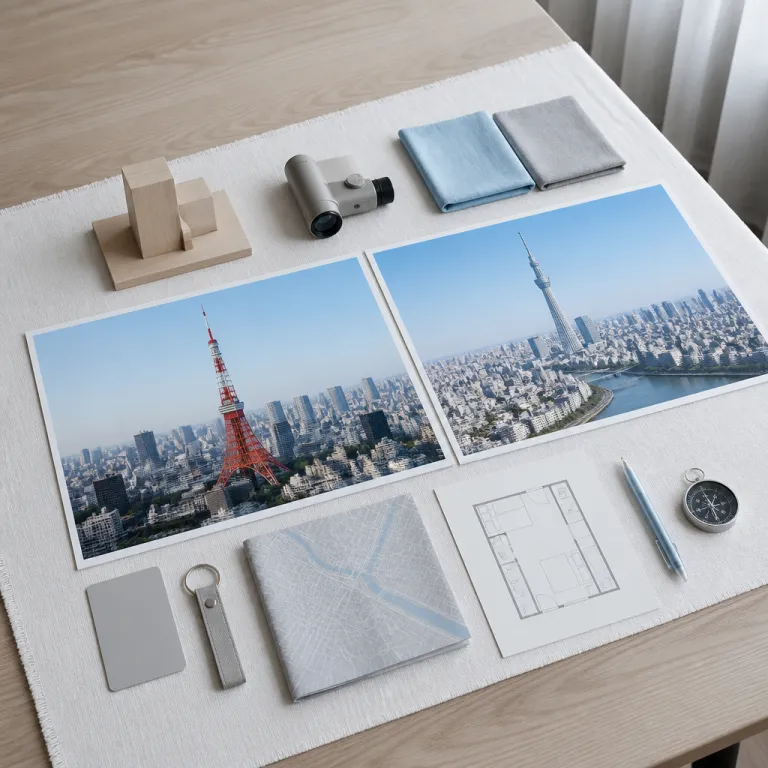
How a tokyo tower vs skytree comparison shapes your hotel choice
Choosing between Tokyo Tower and Tokyo Skytree is not just a sightseeing decision, it quietly shapes where you should sleep in Tokyo. When you understand how each tower, each observation deck, and each surrounding city district feels at night, you can align your hotel with the skyline you want to see from your window. For travelers weighing a detailed tokyo tower vs skytree comparison while shortlisting hotels, this honest link between towers, views, and neighborhoods becomes the main tool for planning a stay that feels both efficient and deeply Japanese.
Tokyo Tower rises 333 metres above Minato, a central ward where many international hotels cluster around the building Tokyo locals still associate with classic broadcasting tower romance. In contrast, Tokyo Skytree stands in Sumida as the tallest structure in Japan at 634 metres, anchoring a newer riverside area where mid range hotels and serviced apartments are growing around the Skytree Tokyo complex. When you weigh this choice, you are really weighing two different city rhythms, two different towers, and two different ways to experience the sky above Tokyo.
Guests who want quick access to Shibuya, Roppongi, and Tokyo Station often find that a hotel near Tokyo Tower or even near Mori Tower in Roppongi Hills Mori offers the best transport balance. Those who prefer quieter evenings, shopping malls under one building, and direct access to the tallest tower in the country may lean toward hotels near Tokyo Skytree and its observation decks. Treat the decision between these two towers as a map of where you will spend your nights, not just where you will ride an elevator to an observation deck or top deck for a single view Tokyo moment.
Height, design, and atmosphere: what the towers really feel like
Tokyo Tower is an orange white broadcasting tower inspired by the Eiffel Tower, and its 333 metre height keeps you close enough to the city to read the streets. The main deck sits at around 150 metres, while the top deck rises to roughly 250 metres yet still preserves a human scale view Tokyo travelers often describe as cinematic rather than abstract. When you compare towers in any honest tokyo tower vs skytree comparison, Tokyo Tower feels like a warm lamp over the city, a building Tokyo residents grew up with and still visit for nostalgic Japanese evenings.
Tokyo Skytree, by contrast, is a futuristic lattice of steel and glass, and its skytree tallest claim is unambiguous because it is the tallest tower and tallest structure in Japan. The first observation deck, often called the main deck, is already higher than Tokyo Tower’s top deck at about 350 metres, and the upper observation deck spirals even closer to the sky at roughly 450 metres with views Tokyo visitors can trace all the way to Mount Fuji on clear days. In this comparison, Skytree Tokyo offers a more elevated, almost aerial observation experience, while Tokyo Tower keeps your eyes anchored to the city grid and the river bends.
Atmosphere matters when you are choosing a hotel, because the tower you prefer hints at the neighborhood you will enjoy after dark. If you like the honest glow of a classic tower Tokyo silhouette and want to stroll to bars in Shiba or Roppongi after your observation deck visit, Tokyo Tower’s side of the city may suit you best. If you prefer the sleek, family friendly malls under Tower Skytree, with aquarium visits and shopping before returning to a nearby hotel, then the Skytree Tokyo area will likely match your travel style and your expectations for the best Japanese urban experience.
Views, observation decks, and how they match different hotel areas
From Tokyo Tower’s main deck, the view Tokyo offers is layered with highways, temples, and the distant outline of Shibuya, and you can easily spot Mori Tower and the Hills Mori complex in Roppongi. The top deck adds a more expansive Tokyo observation angle, but it still keeps the city close enough that you can pick out individual building lights and even your own hotel if you are staying nearby. For many guests running a tokyo tower vs skytree comparison, this intimacy of views Tokyo provides from Tokyo Tower is the best match for a stay in central districts like Shiba, Toranomon, or Roppongi.
Tokyo Skytree’s observation decks deliver a very different experience, because the height is almost double and the city becomes a detailed map rather than a collection of separate buildings. From the main deck and the higher observation deck, you see the Sumida River curve, the Tokyo Skytree shadow stretching across low rise neighborhoods, and the distant Shibuya Sky rooftop deck glinting above Shibuya’s towers. Travelers who love this more abstract, cartographic perspective often choose hotels in Asakusa, Oshiage, or Kinshicho, where the tallest tower in Japan dominates the skyline and the sky feels like part of the room.
Shibuya Sky itself, perched atop a separate building Tokyo knows for its shopping complex, offers open air views Tokyo visitors adore, and it becomes a third reference point in any honest tokyo tower vs skytree comparison. If you plan to visit Shibuya Sky, Tokyo Tower, and Tokyo Skytree in one trip, consider a hotel along the JR Yamanote Line or Hanzomon Line to keep all three observation decks within easy reach. That way you can enjoy different towers and different decks on separate evenings, returning each night to a well located hotel that turns the whole city into your private sky lounge.
Neighborhoods around each tower and what they mean for your stay
The streets around Tokyo Tower in Minato feel residential yet international, with embassies, corporate offices, and long established hotels sharing the same city blocks. You can walk from your room to the tower Tokyo locals still treat as a date night classic, then continue on foot to Zojoji Temple or into Roppongi for late dining. For travelers comparing the tokyo tower vs skytree comparison from a hotel perspective, this area offers the best blend of calm streets, business friendly services, and quick access to nightlife.
By contrast, the Tokyo Skytree district in Sumida is anchored by a single massive building Tokyo visitors know as Tokyo Skytree Town, which houses shopping, dining, and entertainment under the tower skytree base. Families appreciate that they can ride the elevator to the observation decks, return to ground level for dinner, then walk a few minutes back to their hotel without crossing half the city. In this tokyo tower vs skytree comparison, Skytree Tokyo’s neighborhood feels more self contained, while Tokyo Tower’s surroundings connect more directly to wider Japanese urban life.
Shibuya, home to Shibuya Sky and some of the busiest crossings in Japan, offers a third hotel cluster that still ties into this network of towers. Guests who stay near Shibuya can reach Tokyo Tower, Tokyo Skytree, and Mori Tower at Roppongi Hills Mori within a short train ride, then return to a district that never really sleeps. If you want the best access to multiple towers and multiple observation decks, a hotel in Shibuya or Roppongi may serve your itinerary better than staying directly under any single tallest structure.
Practical planning: timing, tickets, and honest expectations
When you plan a tokyo tower vs skytree comparison, start with the sky itself, because weather will decide how far you can see from any observation deck. Clear winter days often give the best Japanese mountain views Tokyo can offer, while humid summer afternoons may soften the skyline and hide distant peaks. If your hotel booking is flexible, consider scheduling your tower visits early in the trip so you can adjust dates if clouds threaten your carefully planned observation decks.
Tokyo Tower generally has shorter queues, especially for the main deck, and this can be a decisive factor if you are staying in a business hotel with limited free time. Tokyo Skytree, as the skytree tallest icon and the tallest tower in Japan, attracts more visitors, so advance reservations for the main deck and upper observation deck are strongly recommended. Many hotels near both towers can assist with ticket information at the front desk, and some even offer packages that bundle room nights with timed entry to a specific tower Tokyo guests have chosen as their priority.
Be honest with yourself about how much time you want to spend inside a building versus exploring the streets below, because that will influence which tower and which neighborhood suits you best. If you value a quick, atmospheric visit followed by dinner in Roppongi or Shiba, Tokyo Tower and nearby hotels will likely feel more convenient. If you prefer to turn the tower skytree visit into a half day experience with shopping, dining, and perhaps a river walk, then a hotel near Skytree Tokyo or along the Tobu Skytree Line will align better with your expectations for the best city experience.
Which tower suits which traveler: matching profiles to views
Business travelers who need to move between offices in central Tokyo often find that staying near Tokyo Tower, Mori Tower, or the Hills Mori complex offers the best balance of transport and atmosphere. The views Tokyo provides from Tokyo Tower’s main deck give them a quick yet satisfying sense of the city before or after meetings, without requiring a long detour to the eastern side of Japan’s capital. In the tokyo tower vs skytree comparison, this group usually values proximity and classic skyline silhouettes over the absolute height of the tallest structure.
Families and first time visitors, on the other hand, frequently gravitate toward Tokyo Skytree because the building Tokyo presents there is not just a tower but an entire entertainment hub. The observation decks, aquarium, shopping mall, and restaurants under Tower Skytree allow them to spend a full day without changing trains, which is especially helpful with children or older relatives. For these travelers, the tokyo tower vs skytree comparison often ends with Skytree Tokyo winning as the best all in one Japanese city experience, even if they still visit Tokyo Tower for its warm orange glow.
Romantic travelers and photography enthusiasts sometimes design itineraries that include all three major decks, from Tokyo Tower to Tokyo Skytree to Shibuya Sky, plus a stop at Mori Tower for an art museum visit. They might book a hotel in Shibuya or Roppongi, using efficient train lines to reach each observation deck at different times of day, chasing sunrise, sunset, and night views Tokyo offers from different angles. For them, the honest answer in the tokyo tower vs skytree comparison is simple, because both towers are essential, and the real decision is which city view to pair with which evening of their stay.
Key figures that shape your tokyo tower vs skytree comparison
- Tokyo Tower stands at 333 metres in height, while Tokyo Skytree reaches 634 metres, making Skytree the tallest tower and tallest structure in Japan according to official operator data.
- Tokyo Skytree welcomes around three million visitors per year, compared with roughly two million annual visitors at Tokyo Tower in recent reports, so queues and crowd levels are typically higher at Skytree’s observation decks, especially on weekends and holidays.
- The main deck at Tokyo Tower sits at about 150 metres, whereas the lower observation deck at Tokyo Skytree is significantly higher at roughly 350 metres, giving a more expansive view Tokyo travelers can compare directly on clear days.
- Both Tokyo Tower and Tokyo Skytree function as broadcasting tower facilities for the city, so each building Tokyo skyline watchers admire also plays a technical role in television and radio transmission.
FAQ: choosing between Tokyo Tower and Tokyo Skytree
Which tower offers better views for first time visitors ?
Tokyo Skytree offers higher panoramic views, Tokyo Tower provides closer cityscape views. For a first visit, many travelers choose Tokyo Skytree for its dramatic height and wide horizon, then add Tokyo Tower for a more intimate look at the city’s buildings and streets. If your hotel is near one of the towers, that proximity can reasonably tip the tokyo tower vs skytree comparison in its favour.
Is Tokyo Tower older than Tokyo Skytree ?
Yes, Tokyo Tower was completed in 1958; Tokyo Skytree in 2012. This age difference explains why Tokyo Tower feels like a classic Japanese icon, while Tokyo Skytree presents a more futuristic design and newer observation decks. Travelers interested in architectural history often visit both towers to experience how Tokyo’s skyline evolved from one broadcasting tower generation to the next.
Which tower is taller and does that matter for hotel planning ?
Tokyo Skytree at 634 metres is taller than Tokyo Tower at 333 metres. The extra height gives Skytree Tokyo broader views Tokyo wide, but it also places the tower in a different part of the city, which affects where you might want to book a room. If you prioritise walking access to the tallest tower and its observation deck, choose a hotel in Sumida or nearby districts rather than Minato.
Are both towers used for broadcasting and does this affect visitors ?
Yes, both serve as broadcasting towers, supporting television and radio signals across Tokyo and surrounding regions. For visitors, this technical role has little direct impact on the experience, beyond the fact that each building Tokyo skyline fans admire must meet strict engineering standards. What you will notice more is the design difference between the older steel frame of Tokyo Tower and the modern structure of Tokyo Skytree.
Can I visit both towers and Shibuya Sky in one day ?
Can I visit both towers in one day ? Yes, with proper planning, both can be visited in a single day. If you also want to include Shibuya Sky, start early at Tokyo Skytree, move to Tokyo Tower in the afternoon, then finish at Shibuya Sky for sunset, choosing a hotel near a major station to minimise travel time between these towers and observation decks.