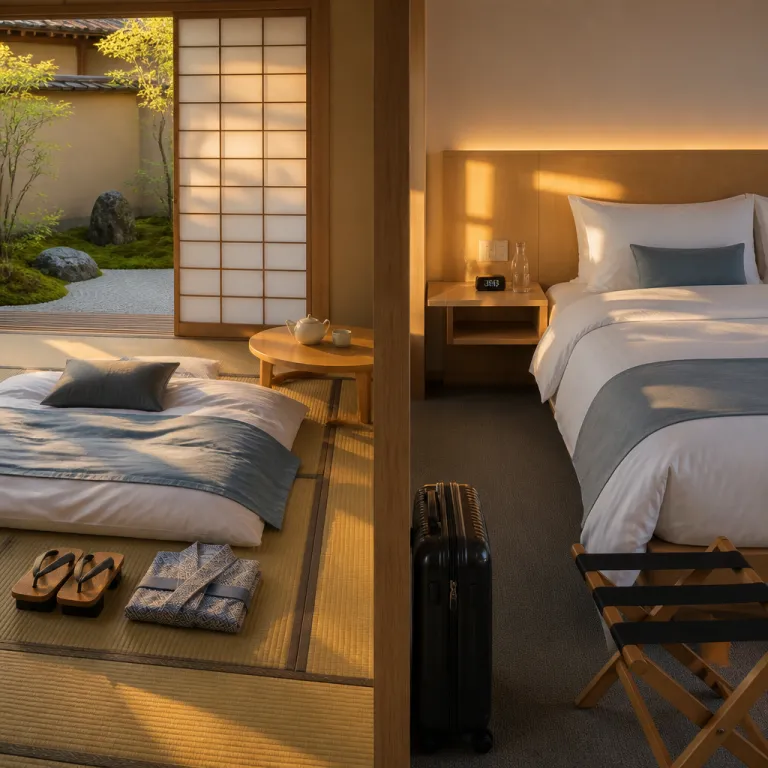
Why a Tokyo ryokan traditional inn stay transforms a simple hotel night
Choosing a Tokyo ryokan traditional inn stay changes how you see the city. Instead of treating your time in Tokyo as just another stop with anonymous hotels, you step into a Japanese style house where every room, corridor, and gesture is shaped by centuries of etiquette. For guests used to a standard hotel stay in Japan or even in Kyoto, the contrast in style, pace, and thought behind each detail feels immediate and quietly powerful.
A ryokan is a traditional Japanese inn with tatami rooms and communal baths. Are ryokans expensive? Prices vary; budget friendly options are available in Tokyo alongside higher end properties. Do ryokans offer meals? Some provide breakfast or dinner, while others focus on lodging only, so it is important to check each plan.
In practical terms, a ryokan stay in Tokyo means sleeping on futons laid directly on tatami rather than on a raised hotel bed. You slide open shōji screens instead of closing heavy curtains, and you may swap a private shower for a shared public bath that follows precise Japanese bathing etiquette. For many guests, this becomes the most memorable experience of their time in Tokyo, more intimate than any landmark and far richer than a conventional hotel stay.
Across traditional inns in the city, the emphasis is on omotenashi, the Japanese philosophy of anticipatory hospitality. Staff move quietly, refilling tea in your room before you even think to ask, or adjusting your futon while you enjoy a hot soak in the bath. When you compare this with large hotels in Japan or in Kyoto, where service can feel efficient but impersonal, the ryokan experience feels like staying in a family house that just happens to be perfectly run.
For travellers focused on booking a place that just “works”, a Tokyo ryokan might initially seem like extra effort. Yet the moment you step into the entrance, remove your shoes, and feel tatami underfoot, the stay becomes less about the price of the room and more about the ritual of arrival. That shift in thought is exactly why a Tokyo ryokan traditional inn stay deserves to be considered alongside, or even instead of, the usual hotels you might first search.
Understanding ryokan etiquette, rooms, and what to expect in tokyo
Before confirming any booking for a Tokyo ryokan, it helps to understand how these traditional Japanese inns work. A ryokan stay follows a rhythm shaped by set check in and check out times, shared spaces, and a clear separation between outdoor shoes and indoor slippers. When guests respect this etiquette, the house runs smoothly and the experience feels calm rather than confusing.
Most ryokans in Tokyo offer tatami floored rooms with low tables, zabuton cushions, and futons stored in cupboards during the day. Staff usually prepare your futon while you are at the public bath or out exploring Asakusa or another neighbourhood, so the room transforms from living space to sleeping space without effort from you. In many city ryokans, bathrooms are shared, though some higher price options and small luxury ryokan properties now include en suite facilities or even a private onsen style bath.
Dress codes are simple but important. You will typically find a yukata robe laid out in your room, and wearing it to the public bath or to dinner is both acceptable and encouraged in traditional Japanese settings. When you walk the corridors in yukata, whether in a modest guest house or a more polished onsen ryokan, you feel part of a quiet procession rather than a crowd of hotel guests in street clothes.
Bathing etiquette is the point that worries many first time visitors to Japan. In a natural hot or hot spring style bath, you always wash thoroughly at the shower stations before entering the shared pool, and you never bring towels into the water itself. Even if your Tokyo ryokan only offers a standard public bath rather than a true open air onsen, the same rules apply, and following them shows respect for both the house and other guests.
Meal expectations also differ from Western hotels. Some ryokans in Tokyo include breakfast only, while others offer full board with elaborate kaiseki dinner courses served either in your room or in a small dining area. When you check availability, pay close attention to whether meals are included in the price, because a kaiseki dinner in a luxury ryokan can easily become the highlight of your stay and may cost as much as the room itself if booked separately.
Where to stay: from asakusa alleys to quiet residential quarters
Location shapes every Tokyo ryokan traditional inn stay, especially if you plan to balance sightseeing with slow evenings. Many first time visitors gravitate toward Asakusa, where the atmosphere still hints at old Edo and where ryokan Asakusa properties sit within a short walk of Sensō ji temple. Staying here places you close to the Sumida River, traditional Japanese craft shops, and compact hotels that coexist with long running ryokans.
One well known option is Asakusa Shigetsu, a real ryokan style property that blends Japanese rooms with views toward the temple precincts and a small rooftop bath. Guests can soak in the public bath after dark, then step out early the next morning to see the Nakamise shopping street before day trippers arrive. For travellers comparing different inns across Tokyo, this balance of location, price, and atmosphere often feels more compelling than a generic hotel near a major station.
Elsewhere in Tokyo, the Yanaka district offers a quieter, almost village like feel. Sawanoya Ryokan, a long running family house here, has tatami rooms that suit solo travellers, couples, and small families, and the staff are known for patient explanations of ryokan etiquette to guests new to Japan. The neighbourhood itself, with its narrow lanes and small temples, gives your stay a sense of continuity with the past that even the best luxury ryokan in more commercial areas can struggle to match.
Travellers who prefer a slightly more contemporary style might consider Andon Ryokan in Taitō, which combines traditional Japanese elements with modern design and art. Rooms are compact, as is common in Tokyo, but the house compensates with a striking terrace and a reservation based private bath that can be booked for timed sessions. This kind of hybrid property shows how ryokan accommodation in Tokyo is evolving, offering stays that appeal to guests who might otherwise default to design forward hotels.
Budget conscious travellers often look toward Tama Ryokan in Shinjuku, where the emphasis is on simple tatami rooms and a friendly, house like atmosphere. While the facilities are modest compared with a full onsen ryokan or a high end hotel, the location near major transport lines makes it easy to reach Asakusa, Kyoto bound trains, or other parts of Japan. When you check availability in these areas, remember that smaller ryokans can fill quickly during peak seasons, so early booking is essential if you want specific room types or meal options.
Comparing price, value, and booking strategies for ryokans in tokyo
Understanding price structures is crucial when you compare a Tokyo ryokan with standard hotels. Public data from the Japan National Tourism Organization and national ryokan associations indicates that the average price for a basic ryokan room in major cities often starts around 6,000–8,000 yen per person, with higher rates for properties that include kaiseki dinner or access to a natural hot spring style bath. Because many ryokans charge per guest rather than per room, couples and solo travellers will see different value equations than they might in Western hotels.
When you begin booking, pay attention to whether the listed rate includes meals, taxes, and service charges. A plan that appears expensive at first glance may actually offer strong value once you factor in a multi course kaiseki dinner and a substantial Japanese breakfast, both of which would cost more if ordered separately in Tokyo restaurants. Conversely, some ryokans in the capital now offer room only options that appeal to guests who prefer to explore Asakusa or other districts for casual dining.
Availability can be tight, especially at smaller house style properties with fewer rooms. Many ryokans still rely on direct booking via their own websites or by phone, though online platforms now list an increasing number of ryokan offers in English. When you check availability, consider flexible dates and be prepared to adjust your stay by a night or two, particularly if you are targeting a specific luxury ryokan with private bathing facilities.
For travellers comparing Tokyo with Kyoto, it is worth noting that Kyoto has a denser concentration of traditional Japanese inns, including some historic onsen ryokan with true hot spring sources. Tokyo, by contrast, offers a mix of urban ryokans with artificial hot baths and a smaller number of properties that pipe in hot spring water from outside the city. If a genuine open air hot spring is your priority, you may decide to split your trip between a Tokyo ryokan for city access and a separate onsen ryokan stay in another part of Japan.
Cancellation policies also differ from standard hotels. Many ryokans in Tokyo apply stricter rules, especially when kaiseki dinner ingredients have already been purchased or when the house has only a handful of rooms. Read these terms carefully during booking, and if in doubt, contact the property directly, as staff at places like Sawanoya Ryokan or Tama Ryokan are often happy to clarify details in simple English for international guests.
Bathing, wellness, and the role of onsen culture in a tokyo ryokan
Bathing is the quiet heart of any Tokyo ryokan traditional inn stay, even when the property does not have a true hot spring. Many ryokans across the city offer a communal public bath, sometimes separated by gender and sometimes reserved by time slot for private use. The water may be standard heated tap water or, in some cases, natural hot spring water piped in from outside Tokyo, but the ritual remains deeply traditional Japanese.
In properties that market themselves as onsen ryokan, the emphasis is on mineral rich hot spring water and, where space allows, open air baths that let guests soak under the sky. While central Tokyo has limited true hot spring sources, some options still manage to create an onsen like atmosphere with carefully designed indoor pools and small outdoor tubs. Guests who value wellness often choose a luxury ryokan specifically for these facilities, accepting a higher price in exchange for repeated long soaks during their stay.
Private onsen style baths are increasingly popular among international visitors who feel shy about shared bathing. Some ryokans in Tokyo, including design forward houses, now offer small private rooms with deep tubs that can be reserved for thirty or sixty minute sessions. When you check availability, look for clear descriptions of whether the bath is truly private, whether it uses natural hot spring water, and whether the fee is included in the room rate or charged separately.
Specific properties illustrate the range of options. Edo Sakura, for example, is often mentioned by travellers seeking a calm Tokyo ryokan with a strong sense of traditional Japanese aesthetics, while Sakura Ryokan appeals to guests who want straightforward tatami rooms and easy access to Asakusa. Asakusa Shigetsu, with its compact rooftop bath, offers a different kind of experience again, showing that even in dense urban districts, a ryokan stay near Asakusa can include a meaningful bathing ritual.
For many guests, the mental reset that comes from this routine is as valuable as any sightseeing. You return from a day in Tokyo’s neon lit streets, wash carefully at the shower stations, then slide into the hot water and feel the city noise fall away. That contrast between the intensity outside and the stillness inside is what elevates a Tokyo ryokan traditional inn stay beyond the level of a simple hotel booking, turning the bath into a daily ceremony rather than a quick functional stop.
Food, service, and how a ryokan stay compares with a hotel
Meals are where a Tokyo ryokan traditional inn stay most clearly diverges from a standard hotel experience. In many ryokans in the city, breakfast and kaiseki dinner are prepared in house, with menus that shift according to season and local availability. Guests are often served in their rooms or in a small dining area, which makes the meal feel more like being welcomed into a private house than eating in a hotel restaurant.
A full kaiseki dinner typically unfolds over multiple courses, each presented on carefully chosen ceramics that echo the overall Japanese style of the ryokan. You might begin with small seasonal appetisers, move through sashimi, grilled fish, simmered vegetables, and rice, then finish with a light dessert, all paced so that you can savour each dish without feeling rushed. In a luxury ryokan, this level of attention to detail can rival high end restaurants in Tokyo or Kyoto, yet the atmosphere remains more intimate because there are fewer rooms and fewer guests.
Service patterns also differ from hotels. Staff in a Tokyo ryokan will usually enter your room at set times to lay out futons, clear trays, or refill tea, and they do so with a formality that reflects traditional Japanese hospitality. For some travellers, this level of interaction feels warmer and more personal than the more transactional service in large hotels, though it does require a little thought about privacy and timing during your stay.
When you compare options, consider how much structure you want around meals and daily routines. A stay with included breakfast and dinner can simplify your planning, leaving your days free for exploring Asakusa, visiting museums, or even taking a day trip toward Kyoto without worrying about restaurant reservations. On the other hand, travellers who prefer spontaneous dining might choose a Tokyo ryokan that offers room only rates, using nearby izakaya and cafés instead of committing to in house kaiseki dinner every night.
Ultimately, the choice between ryokans and hotels in Tokyo comes down to how you want to remember your time in Japan. If you value ritual, quiet, and a sense of continuity with the country’s past, then a Tokyo ryokan traditional inn stay, whether at Edo Sakura, Sakura Ryokan, Sawanoya Ryokan, or another carefully chosen house, will likely feel more rewarding than even the most polished city hotel. If you simply need a bed near a station at the lowest possible price, a conventional hotel may suit you better, but you will miss the layered, slow unfolding experience that only ryokans can provide.
Key statistics for planning a ryokan stay in tokyo
- Tokyo currently offers a relatively small number of registered ryokans compared with its thousands of hotels, which means popular properties can book out quickly during peak travel periods (estimates based on national accommodation statistics and Tokyo tourism data).
- Industry figures from national ryokan associations suggest that the average price for a basic ryokan room in urban areas starts around 6,000 yen per person per night, which is comparable to mid range business hotels once you factor in included breakfast and, in some cases, kaiseki dinner.
- Typical check in times at ryokans in Japan begin around 15:00, with check out usually set at 10:00, slightly earlier than many international hotels, so travellers should plan flight and train schedules accordingly (standard practice across traditional inns).
- Most urban ryokans in Tokyo offer fewer than 20 rooms, and some family run houses operate with under 10, which enhances the sense of personal service but also reduces last minute availability for walk in guests (survey of major ryokan booking platforms).
- Reports from national tourism organisations show that interest in cultural tourism in Japan has risen steadily over the past decade, and ryokan stays are now cited by many international visitors as a primary reason for choosing Japan over other destinations in Asia, reinforcing the value of securing a Tokyo ryokan early in the planning process.
FAQ: planning your tokyo ryokan traditional inn stay
What is the main difference between a tokyo ryokan and a hotel?
A Tokyo ryokan is a traditional Japanese inn with tatami rooms, futon bedding, and often a shared public bath, while a hotel typically offers Western style beds and private bathrooms. Ryokans emphasise ritual, set meal times, and close interaction with staff, whereas hotels focus on flexibility and standardised services. For guests seeking cultural immersion rather than just convenience, ryokans across Tokyo provide a more distinctive stay.
Are ryokans in tokyo suitable for first time visitors to japan?
Yes, many ryokans in Tokyo, including Sawanoya Ryokan and Tama Ryokan, are well used to hosting international guests and explain etiquette clearly. First time visitors should read basic guidelines on removing shoes, using the public bath, and wearing yukata, but the learning curve is gentle. Choosing a property in areas like Asakusa or Yanaka also makes it easy to combine traditional Japanese lodging with straightforward access to major sights.
How far in advance should I book a tokyo ryokan?
For popular properties with limited rooms, it is wise to complete your booking several months ahead, especially during cherry blossom and autumn foliage seasons. Smaller house style ryokans can fill quickly because they may have fewer than ten rooms, and some luxury ryokan options with private onsen facilities are in particularly high demand. Always check availability directly with the property if online calendars show limited options, as cancellations sometimes open last minute spaces.
Do all tokyo ryokans have natural hot spring baths?
No, most urban ryokans in Tokyo offer standard heated baths rather than true natural hot spring onsen, because central Tokyo has limited geothermal sources. Some properties market themselves as onsen ryokan by piping in hot spring water from outside the city or by recreating an onsen like atmosphere with carefully designed baths. If bathing in genuine hot spring water is essential to your stay, confirm details with the ryokan before finalising your booking.
Can I stay in both tokyo and kyoto ryokans on one trip?
Combining a Tokyo ryokan with a stay in Kyoto is an excellent way to experience different sides of traditional Japanese hospitality. Tokyo offers urban ryokans close to districts like Asakusa, while Kyoto has a denser concentration of historic inns and, in nearby regions, more onsen ryokan with open air hot spring baths. Many travellers plan two or three nights in each city, using the shinkansen to move between them and comparing how service, style, and atmosphere shift from one region of Japan to another.
References
- Japan National Tourism Organization (JNTO)
- Japan Ryokan and Hotel Association
- Tokyo Metropolitan Government tourism statistics